Polynucleotides
Polynucleotides in Marylebone, London — purified salmon DNA fragments that bind water and stimulate collagen and elastin, used for skin quality across the under-eye, face, and neck, and for early-stage hair regeneration.
Book Consultation
The short answer
What this treatment is
Polynucleotides are purified short fragments of salmon DNA — a bioactive substance that binds water in tissue, stimulates fibroblasts to produce new collagen and elastin, and has documented anti-inflammatory effects. They are not a filler (no volume) and not a bioremodeller of the Profhilo class (different mechanism); they sit in a third regenerative category, particularly useful for skin where structural filler is the wrong tool — under-eye texture, periorbital crepiness, fine perioral lines — and for early-stage androgenetic hair loss as a non-surgical alternative or adjunct to PRP. The standard protocol is three sessions roughly three weeks apart for the initial course, followed by maintenance.
Areas treated
What's included
- Regenerative — stimulates your own collagen, elastin, and hyaluronic acid production
- Strong evidence for under-eye texture, fine lines, and skin quality
- Hair-growth indication: early-stage androgenetic alopecia in men and women
- Different mechanism from filler and from Profhilo — frequently combined with both
- Standard protocol: 3 sessions 3 weeks apart, then maintenance
- Suitable across all Fitzpatrick phototypes
Boundaries of practice
What's not treated
Good practice means saying no when indicated:
- Pregnancy or breastfeeding
- Active skin infection or autoimmune flare at the injection site
- Known hypersensitivity to fish or seafood (theoretical risk; assess at consultation)
- Active scalp inflammation (folliculitis, severe seborrhoeic dermatitis) for hair indication
- Recent (within 2 weeks) aggressive energy-based treatment at the same site
- Bleeding disorders or current anticoagulant therapy without specialist clearance
Patient journey
What to expect
Consultation & preparation
Avoid ibuprofen, aspirin, vitamin E, fish oil, and alcohol for 24 to 48 hours before treatment to minimise bruising. Come makeup-free; if treating the scalp for hair, wash hair the morning of treatment. Discontinue topical retinoids on treated skin areas 48 hours beforehand.
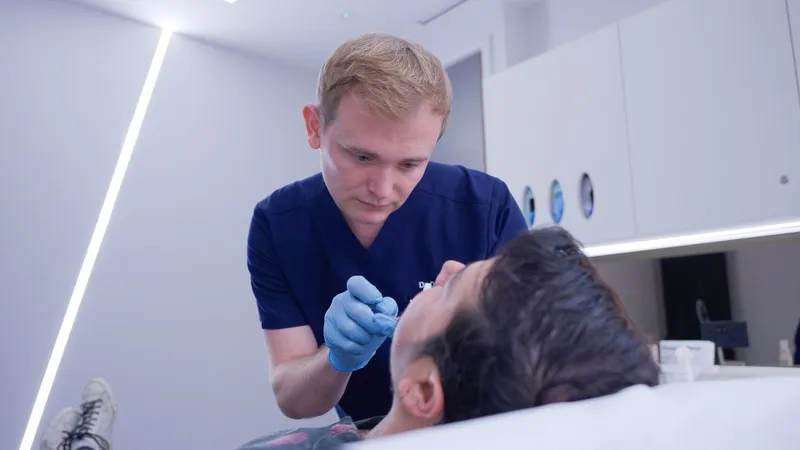
During treatment
Aftercare
Avoid pressure, massage, and makeup at the injection points for 12 hours; for scalp treatment, no shampoo for 12 hours. Skip saunas, steam rooms, intense exercise, and alcohol for 24 hours. Visible improvement starts from the second session for skin, from month 3 for hair. Photos are taken at every visit to track progress objectively.
Transparent, all-in pricing
Skin
Hair
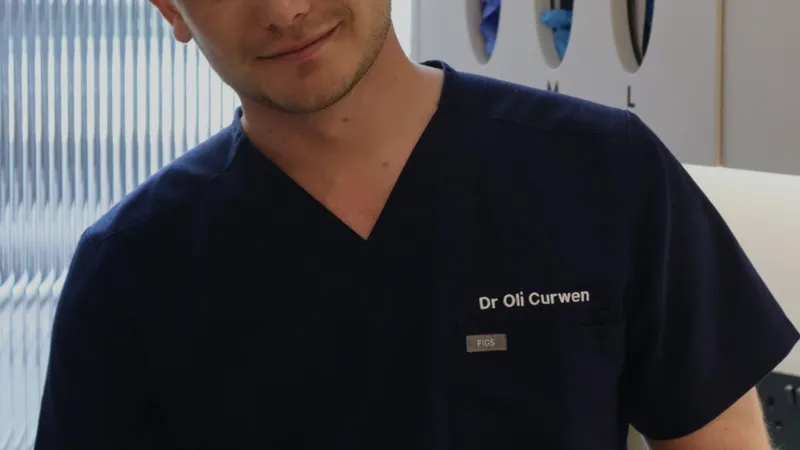
Written and medically reviewed by Dr Oli Curwen , Aesthetic Doctor — MBBS BSc MRCS · MHRA — polynucleotide injectables are CE-marked Class III medical devices.
FAQ
Common
questions
How long until I see results from polynucleotides?
For skin indications, change starts to be visible from session 2 (around week 3) and peaks 8 to 12 weeks after session 3. For hair, change is slower because hair growth cycles are slow — visible improvement from month 3 to 4, peak from month 6 to 9. Photos are taken at baseline and at every appointment so progress is documented even when day-to-day change is hard to see in the mirror.
Do polynucleotides hurt?
For skin indications, discomfort is mild — a small pinch at each injection point, with topical numbing cream applied for 15 minutes beforehand. For scalp hair treatment, the scalp is more sensitive; a finer needle and slow injection technique reduce discomfort, and most patients describe it as 3 to 5 out of 10. The procedure takes 20 to 30 minutes per session.
How do polynucleotides differ from PRP?
Both are regenerative injectable treatments, but PRP (platelet-rich plasma) uses your own blood (drawn, spun, re-injected) and varies by individual; polynucleotides use a standardised, MHRA-compliant pharmaceutical product that delivers a consistent dose every session. PRP is biologically rich but variable; polynucleotides are biologically narrower but predictable. Many clinicians prefer polynucleotides for that consistency, particularly in hair indications.
Are there side effects?
The most common: small bruise at injection points (15% of treatments, resolves 3 to 5 days), mild local swelling for 24 hours, and brief tenderness at the scalp for hair treatment. Rare: localised redness or small lump at an injection point that resolves over 1 to 2 weeks. Polynucleotides have a strong safety profile because they are biologically similar to the body's own building blocks.
How often should I have maintenance?
For skin: a single booster session every 4 to 6 months keeps the regenerative effect topped up. For hair: a maintenance session every 4 to 6 months. Some patients combine polynucleotides with their existing skincare or hair-loss regimen (topical retinoids, oral finasteride, minoxidil) and find the maintenance interval lengthens further.
Can I combine polynucleotides with other treatments?
Yes. Polynucleotides are commonly combined with HA filler (different mechanism, complementary effect), Profhilo (also complementary), and anti-wrinkle injections (different target tissue entirely). Energy-based treatments (laser, microneedling) should be spaced 2 weeks either side. The most common combination at this clinic is polynucleotides under-eye plus tear-trough filler at a separate appointment.
Related Treatments

Get Started
Ready to begin?
Book today.
Dr Oli Aesthetics • 1 Orchard Street, UNTIL Marylebone, London W1H 6HJ
BookAppointments typically available within 1–2 weeks